What is a Job Posting API?
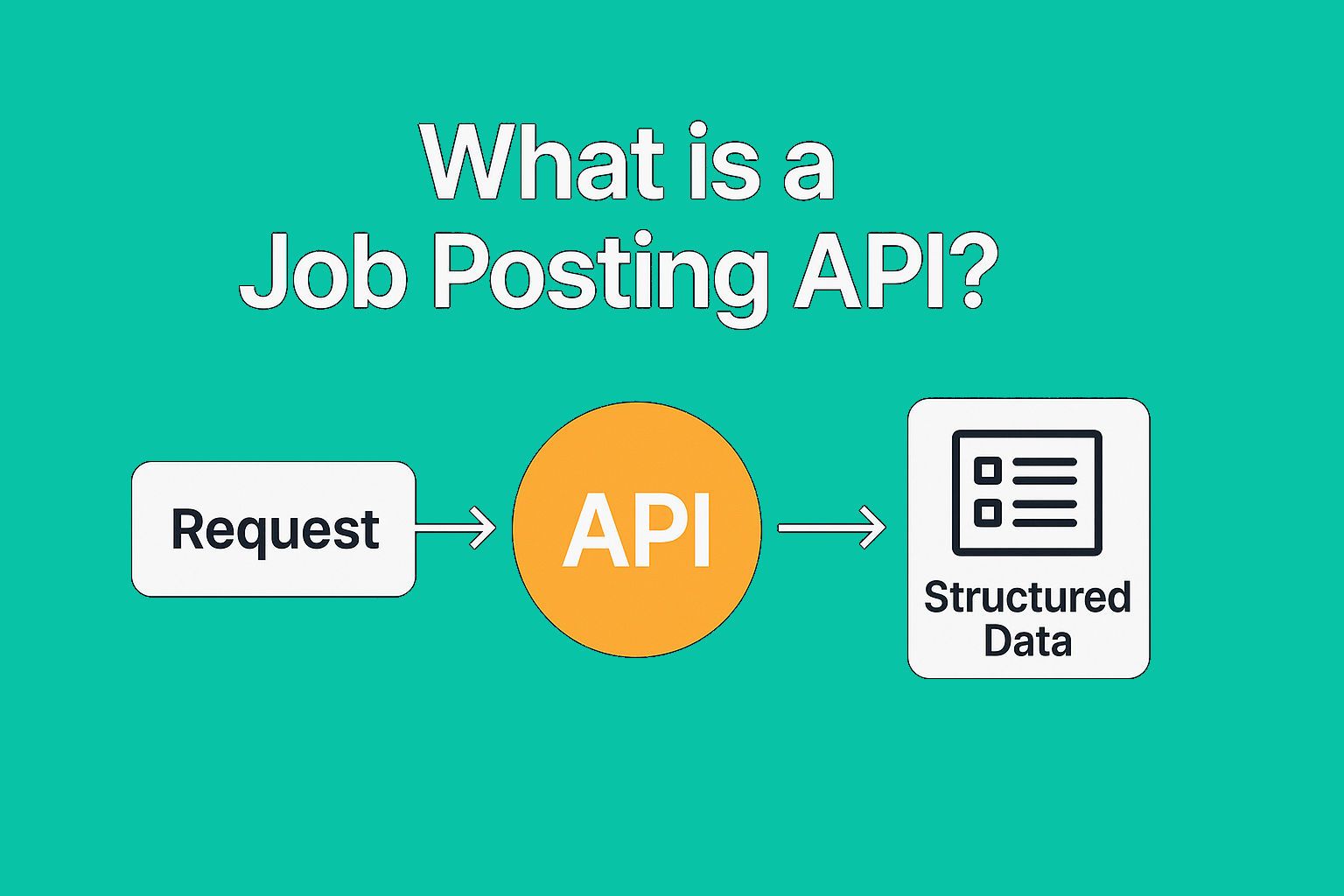
A job posting API gives you programmatic access to job listing data. Instead of scraping job boards yourself or manually collecting postings, you make API calls and get structured job data back.
I built Jobven because I kept running into the same problem: I needed job data for projects, but getting it was always a mess. Either I'd spend weeks building custom scrapers that needed constant maintenance, or I'd pay enterprise prices for data I didn't need at that scale.
This is how these APIs work and what to look for.
How It Works
At its core, a job posting API is just a REST API:
- You make a request - Query for jobs matching your criteria
- The API responds - Returns structured JSON with job listings
- You use the data - Display it, store it, analyze it
curl -X GET 'https://api.jobven.com/v1/public/jobs?q=software+engineer&limit=5' \
  -H 'X-API-Key: your_api_key'
You get back structured data for each job:
{
  "data": [
    {
      "id": "abc123-def456",
      "title": "Senior Software Engineer",
      "summary": "Build scalable systems for a growing fintech company",
      "description": "As a Senior Software Engineer at Acme Corp, you will design and implement high-performance services...",
      "companies": [
        {
          "name": "Acme Corp",
          "website": "https://acme.com"
        }
      ],
      "locations": [
        {
          "addressLocality": "San Francisco",
          "addressRegion": "California",
          "addressCountry": "US"
        }
      ],
      "remoteType": "hybrid",
      "salary": {
        "min": 150000,
        "max": 200000,
        "currency": "USD"
      },
      "skills": {
        "primary_skills": ["Python", "AWS", "PostgreSQL"]
      },
      "experienceLevel": "senior",
      "postedAt": 1733184000
    }
  ],
  "meta": {
    "total": 15234,
    "nextCursor": "some-cursor-value",
    "hasMore": true
  }
}
No parsing HTML. No dealing with rate limits. No maintaining scrapers when sites change their markup.
What Data Do You Get?
The whole point of using an API over scraping is structured, normalized data. Here's what you typically get:
Job Details - Title, description, summary, department, employment type, experience level
Location & Remote - City, state, country, and whether it's remote, hybrid, or on-site
Compensation - Salary ranges with currency and pay period (when employers include it)
Skills - Primary skills, secondary skills, soft skills - extracted and normalized
Company Info - Name, website, industry, size
Metadata - Posted date, application URL, job ID
The key difference from scraping is that this data is already cleaned up. You don't have to figure out how to handle different formats or extract skills yourself.
Why Use an API Instead of Scraping?
When you first need job data, your instinct is probably to build a scraper. I've been there, that's how I started too.
Here's what that actually looks like:
- Spend a week writing scrapers for 10 different company career pages
- Realize that opening a page on your browser is different from fetching it programmatically; hint you'll get blocked
- Spend another week adding proxies and handling CAPTCHAs
- Wake up one morning to find out that 3 of the sites changed their HTML structure overnight, breaking your scrapers
- Spend another week fixing everything
- Repeat forever
A job posting API handles all of this. You focus on your actual product.
Time savings - I'm not exaggerating when I say building reliable job scrapers takes months. An API gets you data in minutes.
Cleaner data - Good APIs normalize everything. Titles are standardized, skills are extracted, salaries are parsed into min/max ranges.
No infrastructure - No proxy costs, no server maintenance, no debugging why your scraper suddenly stopped working.
Where Does the Data Come From?
This is important, and something you should always ask when evaluating job posting APIs.
Aggregated from job boards - Some APIs scrape Indeed, LinkedIn, etc. You get volume, but the data is often stale (it's already been sitting on those boards for days) and you see lots of duplicates.
Employer career pages - This is what I do with Jobven. I scrape directly from company career pages - the original source. Jobs are fresher because you're getting them as soon as employers post them.
ATS integrations - Some APIs integrate directly with Greenhouse, Lever, Workday. Good data quality, but limited to companies using those specific systems.
The source matters. If you're building something where data freshness is important (like job alerts), you want employer-sourced data.
Common Use Cases
I've seen job posting APIs used for:
Niche job boards - Remote-only boards, industry-specific boards, regional boards. The API provides the data, you provide the curation and user experience.
Recruiting tools - Match candidates to openings, track which companies are hiring, identify scaling teams.
Career platforms - Add job recommendations to resume builders, career coaching apps, or skills training platforms.
Market intelligence - Track hiring trends, salary benchmarks, skill demand. Job postings are a leading indicator of company growth.
Automation - Job alerts, CRM integrations, Slack notifications when specific companies post roles.
What to Look For
If you're evaluating job posting APIs, here's what I'd check:
Data source - Where does the data actually come from? Aggregated data tends to be staler.
Freshness - How often is it updated? Daily minimum, more frequent is better.
Coverage - How many jobs? From how many companies? Does it cover your target market?
Data quality - Are skills extracted? Salaries normalized? Or is it just raw job descriptions?
Pricing - Most charge per request or have tiered plans. Make sure it works for your expected volume.
Free tier - Can you actually test it before committing? You should.
Want to try it? I built Jobven to be the job data API I wished existed - employer-sourced, easy to use, with a free tier that actually lets you build something. Check it out →